Well folks, we ran into a little difficulty with this blog, so we've moved to a new address. It is:
http://rogerderygemdesign.blogspot.com
Thanks for understanding.
Roger Dery
Sunday, June 6, 2010


Tuesday, March 10, 2009
2009-post Tucson show; cutting time in the shop
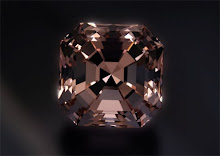
Picked up about 15 pieces of Tsavorite Garnet in Arusha. This is the first one faceted from the parcel. Classic emerald cut shape - one of my favorites.


Umbalite is a variety closely related to Rhodolite. The color of this one is of the finest color - and it came from Mark Saul's rough stock.

Only picked up a few Chrome Tourmalines, but this one turned out quite nice.

Of the Scapolite rough I purchased, this stone was cut from the smallest piece. Some of them may end up over 20cts.

Sunday, January 25, 2009
2009-Jan 17th buying rough in Arusha
Early in the morning we were escorted by our broker to the building that contains many of the local gem merchants. We spent the first hour looking through and purchasing goods from our broker. Then, on our behalf, he solicited numerous dealers, miners and diggers from the Arusha area to visit with us in his office. As you can see from the photo below, they are kept at bay until it is "their" time.
Systematically, we worked through every man’s parcels, setting aside anything of interest and making offers as they waited. This worked sufficiently to our advantage as we ended up with some very nice facetable goods.

I must note though, that buyers are expected to take the parcel – or split it with someone in the group. Selecting just one piece of rough, which is usually the finest in the parcel, will escalate the price to be about the same as purchasing the whole parcel. So under this scenario, selection is futile.

Some of the items we were shown were: Chrome Tourmaline, Pink Spinel, a range of Garnets including Rhodolite, Almandite, Spessartite, variable colors in Grossular including some very fine Tsavorites, facetable Moonstone, several Ruby pieces and mixed colors of corundum from Winza and a new location that only opened up a few weeks ago. The name of the new location is not being verbally conveyed, but I believe the locals know of it.

Late in the morning, after we finished with the stream of local merchants, we were brought to the offices of Swala Gem Traders. They happen to be in the same building. Eric and Mark Saul are the owners. At this time, Eric was away in Europe, and so Mark was able to graciously take the time to share with us his inventory. Swala specializes in the Garnet family, but often has other species available. But today, we focused primarily on his fine selection of Rhodolites. We spent an hour or so working his parcels and came away with a nice selection. Mark is seated in the lower right in the photo.

Systematically, we worked through every man’s parcels, setting aside anything of interest and making offers as they waited. This worked sufficiently to our advantage as we ended up with some very nice facetable goods.

I must note though, that buyers are expected to take the parcel – or split it with someone in the group. Selecting just one piece of rough, which is usually the finest in the parcel, will escalate the price to be about the same as purchasing the whole parcel. So under this scenario, selection is futile.

Some of the items we were shown were: Chrome Tourmaline, Pink Spinel, a range of Garnets including Rhodolite, Almandite, Spessartite, variable colors in Grossular including some very fine Tsavorites, facetable Moonstone, several Ruby pieces and mixed colors of corundum from Winza and a new location that only opened up a few weeks ago. The name of the new location is not being verbally conveyed, but I believe the locals know of it.

Late in the morning, after we finished with the stream of local merchants, we were brought to the offices of Swala Gem Traders. They happen to be in the same building. Eric and Mark Saul are the owners. At this time, Eric was away in Europe, and so Mark was able to graciously take the time to share with us his inventory. Swala specializes in the Garnet family, but often has other species available. But today, we focused primarily on his fine selection of Rhodolites. We spent an hour or so working his parcels and came away with a nice selection. Mark is seated in the lower right in the photo.

I believe the find of the day though, were two pieces of Clinohumite. They were clean, chunky pieces that resembled fine reddish-orange Spessartite. And, it seems they are often mis-identified as Spessartite in the field. I can’t wait to facet them when I get back.
2009-Jan 16th Tanga to Arusha Tanzania
Today the crew is separating into two groups. One group of five is going on safari to see the animals at several game parks. We will not see them again.
The second group of seven (including me) is off to Arusha to work the gem market. As a surprise to us, we landed on the ‘stop-at-every-bus-stop’ bus, again. It is moderately comfortable, but no air conditioning. Normally, the drive to Arusha on a direct commercial bus is 5 hours. But we were able to enjoy the ride for 8 hours.

Our broker showed us the way from the main bus station to position us in a local hotel. After check-in, he prepares us for what will happen in the next few days. We are ready, and excited. It can’t come to soon.
 Our home for the next few days. Only served breakfast, but they washed our clothes and handled many small details for us, though it was a little 'rustic'. I'm sure if my wife came with me we'd be staying somewhere else!
The second group of seven (including me) is off to Arusha to work the gem market. As a surprise to us, we landed on the ‘stop-at-every-bus-stop’ bus, again. It is moderately comfortable, but no air conditioning. Normally, the drive to Arusha on a direct commercial bus is 5 hours. But we were able to enjoy the ride for 8 hours.
Our broker showed us the way from the main bus station to position us in a local hotel. After check-in, he prepares us for what will happen in the next few days. We are ready, and excited. It can’t come to soon.
Our home for the next few days. Only served breakfast, but they washed our clothes and handled many small details for us, though it was a little 'rustic'. I'm sure if my wife came with me we'd be staying somewhere else!
Saturday, January 24, 2009
2009-Jan 15th mining camp to Tanga, Tanzania
Today was our transition day from mining to buying. Some of the crew went back to the pits for one final opportunity in the morning – in hopes of finding another Sapphire. The balance of the team showered, packed and organized their travel items because later today we would make the rough and sometimes uncomfortable drive back to Tanga.
The local mineral show....
At the end of our time at the Umba site, all the locals from the camp and surrounding villages were invited to show up under the main canopy to play show-and-tell. In addition to the miners and their families, the nearby Maasai village came with their finds as well.

In just over two hours we reviewed every stone and parcel. Unfortunately, many of the items were not suitable for faceting.

The local mineral show....
At the end of our time at the Umba site, all the locals from the camp and surrounding villages were invited to show up under the main canopy to play show-and-tell. In addition to the miners and their families, the nearby Maasai village came with their finds as well.
In just over two hours we reviewed every stone and parcel. Unfortunately, many of the items were not suitable for faceting.
I was fortunate as one of our local miners took pity on me and performed translation, as I am insufficient in Swahili for this type of fast activity. Well…. fast may be an understatement.
Each one of us would be singled out, and then surrounded by the sellers. At any given time I may have had 15 to 30 locals around me all reaching forward shoving their open hands towards me, each hand containing their offerings. In minutes, and sometimes in seconds, we had to decide if there was any interest on our part.


Each one of us would be singled out, and then surrounded by the sellers. At any given time I may have had 15 to 30 locals around me all reaching forward shoving their open hands towards me, each hand containing their offerings. In minutes, and sometimes in seconds, we had to decide if there was any interest on our part.
Once concluded that the offering was something I could use, the bidding began (with everyone in ear-shot listening). Usually it was short-lived, maybe 10 to 15 seconds. There was only a few that walked away hoping to get more than I offered. And then, sometimes they came back.
It is possible, and likely, that man-made or synthetic material may be filtered into the offerings in a scenario such as this. And so the bidding must be adjusted to offset any losses we may incur.

As the session came to a close, we began seeing some of the same pieces again that were offered earlier. Only now, it would be offered by someone other than the owner. I can’t blame them for trying, as we may be the only source of income this week, or month. It was fun, and a challenge, and I would do it again. Though I would say it is not suitable for someone who is uncomfortable in close quarters.
It is possible, and likely, that man-made or synthetic material may be filtered into the offerings in a scenario such as this. And so the bidding must be adjusted to offset any losses we may incur.
As the session came to a close, we began seeing some of the same pieces again that were offered earlier. Only now, it would be offered by someone other than the owner. I can’t blame them for trying, as we may be the only source of income this week, or month. It was fun, and a challenge, and I would do it again. Though I would say it is not suitable for someone who is uncomfortable in close quarters.
The mineral show came to an end, we all said our good-byes, and then packed into the bus to drive back to Tanga. For the way back, it took us 7 hours, which placed us at the bus station long after it was closed. And so I am still without luggage and learning to get by with much less. Some of the crew stated that it is a good life lesson. Sure.
One of the many bus stops along the way....
2009-Jan 14th-continued
Since we are close to ending our time here, the mine owner promised we could look through his personal collection of minerals. After our lunch break, we met him at the sorting tables where he laid out his collection. Here we had daylight – and it was brutal, so we placed ourselves under the canopy to avoid direct sunlight.

Michael (the jeweler from Bern Switzerland-shown below), and I were the first to review his rough. There was a greater range of minerals than I had anticipated seeing. We first worked our way through red Garnets. He had kilos of small goods in the one half to 2 gram sizes. Of no interest to me, but may work for others. Next was a parcel of larger Garnets in the 5 to 10 gram sizes. Even though these were the premium sizes, I did not take any, as they were a little dark for me and this was something I have surplus of in my cutting shop. Michael is weighing up his selection.

And here, are two massive examples of Sphene. I reveiwed several of what I thought were larger pieces in Madagascar last summer, but these two put them to shame. Too bad they are not transparent enough to be faceted!

The review of the owner’s rough came to an end in mid afternoon. It was time for a short rest, shower, and then prepare for the camp party this evening. Everyone who had contributed in any way during the week was welcome and encouraged to come. In the late afternoon, as daylight came to an end, two goats were slaughtered, prepared and barbecued. Other food items were brought to the party for all to enjoy as well as beer and soft drinks.
2009-Jan 14th Umba River mining camp
As you have seen from the photos, alluvial mining is hard, physical work. For the local miners who perform this work year-round, their bodies are accustomed to the demands. For the rest of us, this is painful work… and so it is for me. However, the natural excitement of reaching into the iron-stained red dirt and pulling up a Sapphire is too enticing and keeps us from stopping. Yes.... we're gem junkies!
A typical sized pit for a group of four to work was roughly 2 metres wide and 3 to 4 metres long. If you were lucky, you may hit the gravel layer in less than one half metre, but usually not. Three to four hours working time for each pit was a good average. Usually a team would complete two pits per day. Like this:
The sorting process was performed at the site only a few metres away, just far enough to avoid the dirt being thrown from the pit. This is not scientific sorting like what may be found and a diamond-bearing claim. It is basically using your eyes to review the gravels for anything that may stand out as something other than granite type gravel. We look for flashes of light and anything shiny. Hubie and Monika looking up to the sun to review what was just pulled up from the rubble.

A typical sized pit for a group of four to work was roughly 2 metres wide and 3 to 4 metres long. If you were lucky, you may hit the gravel layer in less than one half metre, but usually not. Three to four hours working time for each pit was a good average. Usually a team would complete two pits per day. Like this:
The sorting process was performed at the site only a few metres away, just far enough to avoid the dirt being thrown from the pit. This is not scientific sorting like what may be found and a diamond-bearing claim. It is basically using your eyes to review the gravels for anything that may stand out as something other than granite type gravel. We look for flashes of light and anything shiny. Hubie and Monika looking up to the sun to review what was just pulled up from the rubble.

This is the pit that Sherris and Amy were working. It is much deeper than the areas Hubie and I were prospecting -- and very fortunate for us.
2009-Jan 13th Umba River mining camp
Since we had a reasonable outcome the day before, several from the team decided to purchase the next days’ truck haul to be placed through the washing plant. Fred, Beatrice, Michael, Thomas and Monika joined together to purchase the next batch from the wash. The balance of the crew continued to work their existing pits, or chose new locations.


The view from here is.... "are you sure there's something in there worth keeping?" Well, after cleaning the rough, washing it actually, the workable goods become more apparent with shiny surfaces now exposed.

As daylight was coming to an end, the cut-able’s from the days’ machine wash were now separated on the sorting tables for all to see. They did well, much better than our take on Monday. The photo below shows their selection from the wash. A nice batch of rough.... I'm a little jealous!
Today, from my pit, there were several nice crystals. The batch including a larger light blue Sapphire over 2 grams and several red Garnets over 3 grams, plus a dozen or so of smaller Garnets. Several green Tourmaline pieces were also found but were probably not cut-able for me.
The view from here is.... "are you sure there's something in there worth keeping?" Well, after cleaning the rough, washing it actually, the workable goods become more apparent with shiny surfaces now exposed.
2009-Jan 12th Umba River mining camp
After a few hours in the pits on the day before, we are better prepared for the following days. As we now know what we are up against as far as working time, energy expended, and expected outcome (which seemed dismal at times). The missing piece though, is how tiring the work is. It is hot (roughly 30*C to 35*C) and humid and we have expended ourselves. The miners though, have been doing this for years and so seems less effort coming from them.

As a group, the mine owner made the team an offer. We would have an opportunity to purchase a dump truck sized load of gem gravels – which would be moved through his huge ‘washing machine’. Seen here:

Only the heavy minerals would survive – those with the higher specific gravity. The price seemed steep, but considering the conditions, this seemed like a reasonable opportunity. Even though there was no guarantee that the batch from the machine would produce anything useable or not, it was a risk. So Tom, Lisa and I opted to purchase the first run and split the outcome. We began working the wash in the afternoon session. It was laborious work, the sun was hot, and we were hopeful.

Above is Lisa Elser from Vancouver leaning over the sorting table.
As a group, the mine owner made the team an offer. We would have an opportunity to purchase a dump truck sized load of gem gravels – which would be moved through his huge ‘washing machine’. Seen here:
Only the heavy minerals would survive – those with the higher specific gravity. The price seemed steep, but considering the conditions, this seemed like a reasonable opportunity. Even though there was no guarantee that the batch from the machine would produce anything useable or not, it was a risk. So Tom, Lisa and I opted to purchase the first run and split the outcome. We began working the wash in the afternoon session. It was laborious work, the sun was hot, and we were hopeful.
Above is Lisa Elser from Vancouver leaning over the sorting table.
2009-Jan 11th continued; Umba River Valley
Here's the main guy who worked our pit.... shamed me very badly as he moved more dirt than I could have imagined.


 Here's Hubie workin' the sieve with a local miner. It was a messy business but we couldn't wait until it was finished to look over the gravels.


Sherris, sitting next to her pile of pebbles. In the heat, we tried to find ourselves working the pile in some shade as it was borderline unbearable.


They began working the space with pickaxe’s to break up the hardened surface. Then, methodically shoveled off the overburden until the ‘contact-zone’ containing the gem bearing gravels were reached. In some pits, this may have only been 1/4 metre, and then in other locations it was over 2 metres.
Once the gravel layer was located, the miners worked more cautiously, not wanting to throw into the massive dirt piles any valuable pebbles. The gravel layer was placed into hand constructed sieve boxes as shown below, and vigorously jerked back and forth so that the non-desirable dirt and small pebbles fell to a pile.
Here's Hubie workin' the sieve with a local miner. It was a messy business but we couldn't wait until it was finished to look over the gravels. And then, every once in a while, we'd find something worthwhile. The larger is a Rhodolite, the smaller appears as a Malaya colored Garnet. Further testing will verify this was accurate.
Sherris, sitting next to her pile of pebbles. In the heat, we tried to find ourselves working the pile in some shade as it was borderline unbearable.
2009-Jan 11th Usambara Mountains, Tanzania
Shown here is a view from the bus window of the Usambara Mountains. From our hotel in Tanga, it is roughly a 6 hour drive west to the Umba River valley mining region.


We could see (and feel) where the road had been frequently washed out and this created some ‘craters’ that we needed pass over. From time to time we had to exit the bus to reduce weight and oversee the crossing of a chasm. Very interesting, but then ‘this is Africa’.
After introductions and room or tent assignments, we then rested for a short time. A hot meal was provided and then it was announced we still had over three hours of sunlight. So with that in mind, no time was wasted in changing into our most worn or aged clothing. Then, in groups of four [two travelers teamed up with two miners], we walked about two kilometres to the digging area.
As you can see it was a bit of a hike to get to the general work area.

As we went along, small groups of four split off into their own chosen digging spots.


The first two hours were on paved tarmac; the next two were on a graded but bumpy gravel road. And the final two hours were a single winding lane of sand and gravel. We experienced a constant ‘bobbing and weaving’ in our seats, which felt more like a roller-coaster ride.
We could see (and feel) where the road had been frequently washed out and this created some ‘craters’ that we needed pass over. From time to time we had to exit the bus to reduce weight and oversee the crossing of a chasm. Very interesting, but then ‘this is Africa’.
After introductions and room or tent assignments, we then rested for a short time. A hot meal was provided and then it was announced we still had over three hours of sunlight. So with that in mind, no time was wasted in changing into our most worn or aged clothing. Then, in groups of four [two travelers teamed up with two miners], we walked about two kilometres to the digging area.
As you can see it was a bit of a hike to get to the general work area.
As we went along, small groups of four split off into their own chosen digging spots.
Hubie shown below perusing the site where we will work for the balance of the day.
2009-Jan 10th Tanga, Tanzania
Today we begin our journey to the northern mining areas of the Umba River Valley. Though our final destination is the gem market of Arusha.
 Sometimes there would be an impediment to our progress...
 We were just happy to have paved roads, since we already had an understanding what it would be like later on.
Sometimes there would be an impediment to our progress...We were just happy to have paved roads, since we already had an understanding what it would be like later on.On the way to Umba, we stop and spend the night in Tanga which is roughly a five-hour drive from Dar. Tanga is known as the major shipping port for southern and eastern Africa. Fortunately, the drive to Tanga was on paved tarmac and so it was comfortable for African standards.
2009-Jan 9th in Dar es Salaam
We are to visit "SEAMIC" for the day. "SEAMIC" is the Southern and Eastern African Mineral Centre. It operates out of Dar es Salaam but is supported by 8 east African countries.
Their vision is to supply support services to the mineral, and mining industries. They provide training, testing and consulting services to the mineral, petrology, geology, gemmology and geo-sciences sectors.
 My long-time friend and gem carver, Sherris Shank, seated above.
 Two other participants from the team, Monika and Beatrice from Switzerland.
In addition to offering two workshop/trips per year, SEAMIC conducts year-long training in gemology and the lapidary arts. Shown below is some of their equipment.
 Above, a platform-style Japanese made Imahashi faceting machine.


Their vision is to supply support services to the mineral, and mining industries. They provide training, testing and consulting services to the mineral, petrology, geology, gemmology and geo-sciences sectors.
 My long-time friend and gem carver, Sherris Shank, seated above.
 Two other participants from the team, Monika and Beatrice from Switzerland.
Visiting SEAMIC
SEAMIC is the official sponsor of our trip and has oversight over everything we as a team do. So it is here that we begin our discovery of what Tanzania has to offer. The original plan was for all the participants to take part in two, separate, full day lectures performed by Dr. Nakara Matemu, the director of SEAMIC. Since I arrived a day late, I missed the first lecture that focused on geology, but was still able to sit in the gemology class on Friday.
In addition to offering two workshop/trips per year, SEAMIC conducts year-long training in gemology and the lapidary arts. Shown below is some of their equipment.
 Above, a platform-style Japanese made Imahashi faceting machine.
Above, some of the lapidary machines and flex-shafts.
Shown seated above is Huan Toh of Singapore operating an Ultratec, which is a very high quality mast-style faceting machine.
Students are primarily Tanzanian, but are welcome from all over the world. Through my visit to the facility, I witnessed first hand what is available through their facility. SEAMIC, I believe, can be a catalyst in developing careers for young Africans. During my stay in Tanzania I will look for ways that I, and others, can assist the people of this developing country.
2009-Jan 6, 7, 8th Detroit to Dar es Salaam
Flights, and airports – mostly all of day one was wasted as we waited for an engine part for the AirBus 330. So my travel to Tanzania which ran through Amsterdam and Dubai - took me into day two and three.


The flight from Detroit was delayed 10 hours, which caused me to miss my connection in Amsterdam and then Dar es Salaam. I was re-routed the next day to Dubai. After a five-hour wait, I finally made it to Dar, though a day late. And, like the trip to Madagascar last summer, my main luggage did not arrive. But this time I was better prepared as I separated out my most important items and a small amount of clothing into my carry-on luggage. At least I knew I could get by now for a few days.
Hubert Heldner, the trip coordinator, met me at the Dar es Salaam airport, which gave us an opportunity to get to know each other and chat privately as we drove the 45 minutes to our guest house. Considering our first meeting, I can say that we will get along very well.

So now I’ve arrived and have an opportunity to meet the rest of the team. After several previous African adventures, I have experienced all manner of accommodations. I can say I am very pleased with our place considering how it could be – the food is excellent, and typical of a European standard with a Swiss flair.
Of the team, I am already well acquainted with rough dealers, Tom and Lisa from Vancouver (www.custom-cutgems.com), and of course my friends gem carver Sherris Shank (www.gemscapes.com) and photographer, Amy Baltroup of Michigan. The balance of the crew is Swiss, with the exception of Huan Toh from Singapore.
Tuesday, December 30, 2008
On to Tanzania!
End of December 2008
I am now preparing for another buying trip - this time to Tanzania. Like the trip to Madagascar, I prefer to work within a buying group. And thus, we are working with a group of 12 participants, not including drivers, guides and our hosts. I know five of the participants personally and they are all involved in the gem trade in North America. The balance of the team are mostly Europeans.
We are hopeful that internet access shall not be a problem.... but we're talking Tanzania. So our expectations are not set high. If I do have access, I will continue to post my findings and stories here in the blog. If not, well.... it will be done as soon as I have internet access again. Hope you are able to follow along.
My flight arrives in Dar es Salaam on the 7th of January, returning to the U.S. roughly around the 21st. So we have about 12 days on the ground, with 6 of them at a mining camp in the Umba Valley. Here's what we're hoping to find:
This is Scapolite I picked up from Tanzania two years ago. Hoping to see some more.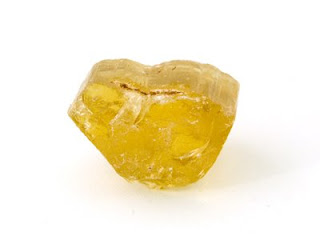
I am now preparing for another buying trip - this time to Tanzania. Like the trip to Madagascar, I prefer to work within a buying group. And thus, we are working with a group of 12 participants, not including drivers, guides and our hosts. I know five of the participants personally and they are all involved in the gem trade in North America. The balance of the team are mostly Europeans.
We are hopeful that internet access shall not be a problem.... but we're talking Tanzania. So our expectations are not set high. If I do have access, I will continue to post my findings and stories here in the blog. If not, well.... it will be done as soon as I have internet access again. Hope you are able to follow along.
My flight arrives in Dar es Salaam on the 7th of January, returning to the U.S. roughly around the 21st. So we have about 12 days on the ground, with 6 of them at a mining camp in the Umba Valley. Here's what we're hoping to find:
This is Scapolite I picked up from Tanzania two years ago. Hoping to see some more.
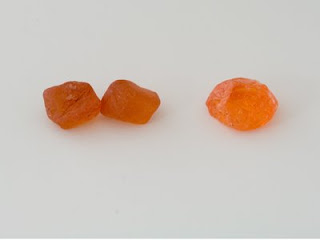
From northern Tanzania, there is a relatively new find of Spessartites. While the Tanzanian goods may not rival the very fine Nigerian rough, they are still attractive in their own right.
One of my favorite gems to cut is Tourmaline. I am very hopeful to find some on this trip.
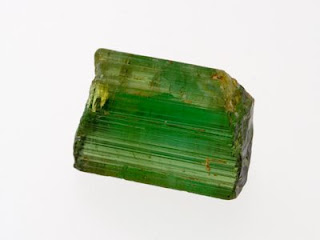
So now all we have to do is find the rough!
Subscribe to:
Posts (Atom)