Saturday, January 24, 2009

2009-Jan 12th Umba River mining camp

After a few hours in the pits on the day before, we are better prepared for the following days. As we now know what we are up against as far as working time, energy expended, and expected outcome (which seemed dismal at times). The missing piece though, is how tiring the work is. It is hot (roughly 30*C to 35*C) and humid and we have expended ourselves. The miners though, have been doing this for years and so seems less effort coming from them.


As a group, the mine owner made the team an offer. We would have an opportunity to purchase a dump truck sized load of gem gravels – which would be moved through his huge ‘washing machine’. Seen here:


Only the heavy minerals would survive – those with the higher specific gravity. The price seemed steep, but considering the conditions, this seemed like a reasonable opportunity. Even though there was no guarantee that the batch from the machine would produce anything useable or not, it was a risk. So Tom, Lisa and I opted to purchase the first run and split the outcome. We began working the wash in the afternoon session. It was laborious work, the sun was hot, and we were hopeful.


Above is Lisa Elser from Vancouver leaning over the sorting table.

2009-Jan 11th continued; Umba River Valley

Here's the main guy who worked our pit.... shamed me very badly as he moved more dirt than I could have imagined.


They began working the space with pickaxe’s to break up the hardened surface. Then, methodically shoveled off the overburden until the ‘contact-zone’ containing the gem bearing gravels were reached. In some pits, this may have only been 1/4 metre, and then in other locations it was over 2 metres.


Once the gravel layer was located, the miners worked more cautiously, not wanting to throw into the massive dirt piles any valuable pebbles. The gravel layer was placed into hand constructed sieve boxes as shown below, and vigorously jerked back and forth so that the non-desirable dirt and small pebbles fell to a pile.
Here's Hubie workin' the sieve with a local miner. It was a messy business but we couldn't wait until it was finished to look over the gravels.


And then, every once in a while, we'd find something worthwhile. The larger is a Rhodolite, the smaller appears as a Malaya colored Garnet. Further testing will verify this was accurate.


Sherris, sitting next to her pile of pebbles. In the heat, we tried to find ourselves working the pile in some shade as it was borderline unbearable.

2009-Jan 11th Usambara Mountains, Tanzania

Shown here is a view from the bus window of the Usambara Mountains. From our hotel in Tanga, it is roughly a 6 hour drive west to the Umba River valley mining region.


The first two hours were on paved tarmac; the next two were on a graded but bumpy gravel road. And the final two hours were a single winding lane of sand and gravel. We experienced a constant ‘bobbing and weaving’ in our seats, which felt more like a roller-coaster ride.


We could see (and feel) where the road had been frequently washed out and this created some ‘craters’ that we needed pass over. From time to time we had to exit the bus to reduce weight and oversee the crossing of a chasm. Very interesting, but then ‘this is Africa’.

After introductions and room or tent assignments, we then rested for a short time. A hot meal was provided and then it was announced we still had over three hours of sunlight. So with that in mind, no time was wasted in changing into our most worn or aged clothing. Then, in groups of four [two travelers teamed up with two miners], we walked about two kilometres to the digging area.

As you can see it was a bit of a hike to get to the general work area.


As we went along, small groups of four split off into their own chosen digging spots.

Hubie shown below perusing the site where we will work for the balance of the day.

2009-Jan 10th Tanga, Tanzania

Today we begin our journey to the northern mining areas of the Umba River Valley. Though our final destination is the gem market of Arusha.

Sometimes there would be an impediment to our progress...


We were just happy to have paved roads, since we already had an understanding what it would be like later on.

On the way to Umba, we stop and spend the night in Tanga which is roughly a five-hour drive from Dar. Tanga is known as the major shipping port for southern and eastern Africa. Fortunately, the drive to Tanga was on paved tarmac and so it was comfortable for African standards.

2009-Jan 9th in Dar es Salaam

We are to visit "SEAMIC" for the day. "SEAMIC" is the Southern and Eastern African Mineral Centre. It operates out of Dar es Salaam but is supported by 8 east African countries.

Their vision is to supply support services to the mineral, and mining industries. They provide training, testing and consulting services to the mineral, petrology, geology, gemmology and geo-sciences sectors.

My long-time friend and gem carver, Sherris Shank, seated above.


Two other participants from the team, Monika and Beatrice from Switzerland.

Visiting SEAMIC
SEAMIC is the official sponsor of our trip and has oversight over everything we as a team do. So it is here that we begin our discovery of what Tanzania has to offer. The original plan was for all the participants to take part in two, separate, full day lectures performed by Dr. Nakara Matemu, the director of SEAMIC. Since I arrived a day late, I missed the first lecture that focused on geology, but was still able to sit in the gemology class on Friday.

In addition to offering two workshop/trips per year, SEAMIC conducts year-long training in gemology and the lapidary arts. Shown below is some of their equipment.

Above, a platform-style Japanese made Imahashi faceting machine.


Above, some of the lapidary machines and flex-shafts.


Shown seated above is Huan Toh of Singapore operating an Ultratec, which is a very high quality mast-style faceting machine.

Students are primarily Tanzanian, but are welcome from all over the world. Through my visit to the facility, I witnessed first hand what is available through their facility. SEAMIC, I believe, can be a catalyst in developing careers for young Africans. During my stay in Tanzania I will look for ways that I, and others, can assist the people of this developing country.

2009-Jan 6, 7, 8th Detroit to Dar es Salaam

Flights, and airports – mostly all of day one was wasted as we waited for an engine part for the AirBus 330. So my travel to Tanzania which ran through Amsterdam and Dubai - took me into day two and three.

The flight from Detroit was delayed 10 hours, which caused me to miss my connection in Amsterdam and then Dar es Salaam. I was re-routed the next day to Dubai. After a five-hour wait, I finally made it to Dar, though a day late. And, like the trip to Madagascar last summer, my main luggage did not arrive. But this time I was better prepared as I separated out my most important items and a small amount of clothing into my carry-on luggage. At least I knew I could get by now for a few days.

Hubert Heldner, the trip coordinator, met me at the Dar es Salaam airport, which gave us an opportunity to get to know each other and chat privately as we drove the 45 minutes to our guest house. Considering our first meeting, I can say that we will get along very well.


So now I’ve arrived and have an opportunity to meet the rest of the team. After several previous African adventures, I have experienced all manner of accommodations. I can say I am very pleased with our place considering how it could be – the food is excellent, and typical of a European standard with a Swiss flair.


Of the team, I am already well acquainted with rough dealers, Tom and Lisa from Vancouver (www.custom-cutgems.com), and of course my friends gem carver Sherris Shank (www.gemscapes.com) and photographer, Amy Baltroup of Michigan. The balance of the crew is Swiss, with the exception of Huan Toh from Singapore.

Tuesday, December 30, 2008

On to Tanzania!

End of December 2008
I am now preparing for another buying trip - this time to Tanzania. Like the trip to Madagascar, I prefer to work within a buying group. And thus, we are working with a group of 12 participants, not including drivers, guides and our hosts. I know five of the participants personally and they are all involved in the gem trade in North America. The balance of the team are mostly Europeans.


We are hopeful that internet access shall not be a problem.... but we're talking Tanzania. So our expectations are not set high. If I do have access, I will continue to post my findings and stories here in the blog. If not, well.... it will be done as soon as I have internet access again. Hope you are able to follow along.

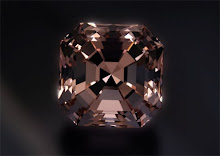
My flight arrives in Dar es Salaam on the 7th of January, returning to the U.S. roughly around the 21st. So we have about 12 days on the ground, with 6 of them at a mining camp in the Umba Valley. Here's what we're hoping to find:

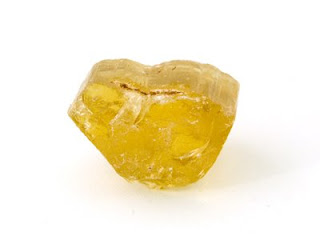
This is Scapolite I picked up from Tanzania two years ago. Hoping to see some more.

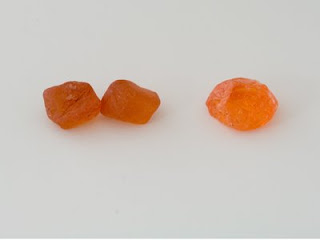
From northern Tanzania, there is a relatively new find of Spessartites. While the Tanzanian goods may not rival the very fine Nigerian rough, they are still attractive in their own right.


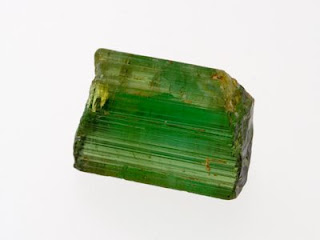
One of my favorite gems to cut is Tourmaline. I am very hopeful to find some on this trip.

So now all we have to do is find the rough!

Adding new gems from Madagascar roughs

September through December 2008
Am working through the goods from Mada. Here's a few that were completed in the past several months.

In the rough, we saw many larger roughs in Sphene, though many of them were really 'cabbing' grade. So it was mostly the smalls that we were interested in since we were certain they were 'cuttable'.


Only picked up one piece of Apatite - and this is from a slice off one end of the larger crystal.

This was cut from a crystal we purchased as golden Beryl, but we knew it was Scapolite before we left the country. It was a fine piece nonetheless, and now enjoy the look.


Many of the larger Garnets had a purplish overtone, and given their Specific Gravity, they should fall into the Rhodolite range. But locally in Mada, they are all lumped together.

Monday, December 29, 2008

Back in Tana... more dealers

July 5th and 6th, 2008
After spending some fun time in Tulear, we flew back to Tana. It's roughly a 17 hour grueling drive and flying seemed so 'civilised'.

We're now back in the capitol. Our pocketbooks are a smidgeon lighter, but we are still interested in looking at more goods. We thought we had already seen everything this dealer had, but we did not count on his influence in the local market. There were goods shown to us on our final day [shown below] that we had not seen earlier.


Here's a full view of one spread. All Garnet, mostly Almandine - but really they just mix it all together - probably because it is all found together and is in the same color range.


Then, from time to time we are surprised again. We 'cherry-picked' some goods from the parcel.

Closing up in Illakaka and heading south

July 3rd and 4th, 2008
We're finished with our buying in Illakaka, and are now weaving our way through town. This photo shows a typical street scene as vehicles have to tangle with pedestrians and carts.

Sometimes bike travel is easier than autos.

As we are passing south, there are numerous small 'buying' shops along the way.


We are now leaving Illakaka, heading south towards the town of Tulear. The signs regarding Sapphires are on many signposts.


And then, just as we are leaving all hustle of the town, we see such a nice building set up for Sapphire buying. It seemed this was somewhat of an anomaly.


At this point we are on our way to the ocean. And then we are surprised again to find digging taking place in another river near a small bridge. The work continued upriver for several kilometres.


As you can see here, we are looking out at least 5 kilometres.